
Buyer guide
OEM vs ODM vs Private Label Tactical Gear: A Buyer’s Decision Guide
A buyer guide to choosing OEM, ODM or private label for tactical apparel and load-bearing product programmes.
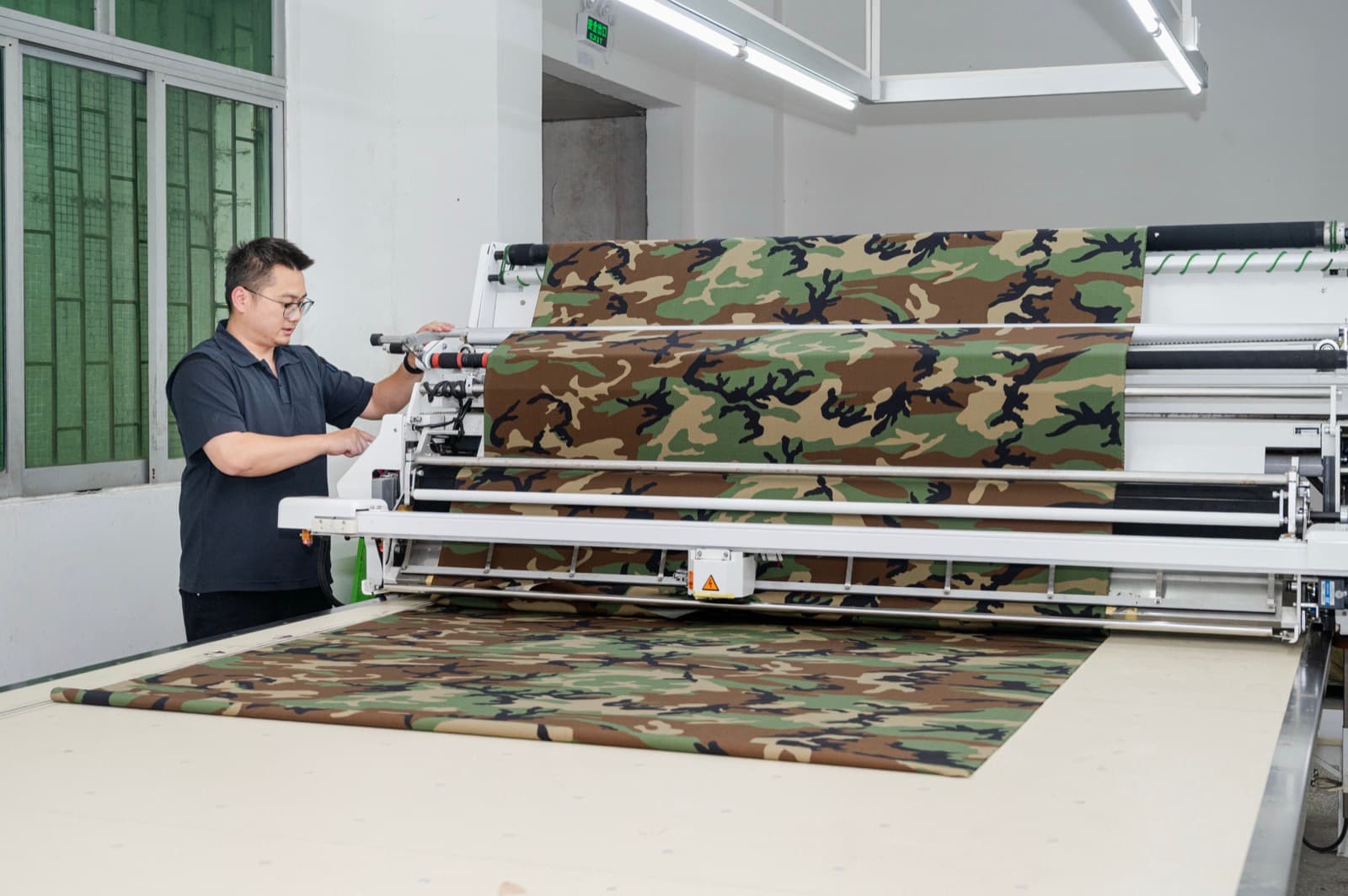
OEM vs ODM vs Private Label Tactical Gear: How to Choose the Right Route for Your Brand
Short answer: use OEM when you need a manufacturer to make to your defined design or technical specification; use ODM when you want to adapt a supplier-developed product; use private label when you want to sell an established product under your own brand with limited product changes. In tactical gear, the practical boundary is set by the approved specification, ownership terms, degree of modification and production agreement—not by a label used casually in a sales conversation.
The three terms are often used interchangeably in global sourcing. That creates trouble when a buyer expects a proprietary design and a supplier has priced a logo application to an existing style. Before asking for a quotation, a brand owner, distributor or project buyer should decide what must be original, what can be adapted, and what commercial and technical controls are required for the launch.
This guide compares the routes for tactical apparel and equipment such as plate carriers, pouches, belts, uniforms and gloves. It is written for B2B buying teams. It is not legal advice, and it should not be used to make claims about a product’s protective performance, compliance or origin without supporting, current documentation.
The definitions: make them operational before making them contractual
There is no single universal commercial definition that removes the need for a contract. Still, the following working definitions help a sourcing team organise its decision.
OEM: manufacture to a buyer-controlled requirement
OEM commonly means that the buyer supplies a product concept, drawing, technical pack, approved components, construction requirement or other controlling specification, and the manufacturer produces it. The level of buyer control can vary. One OEM project may involve only colour, labelling and packaging; another may include a new pattern, material selection, measurement tolerances, hardware, inspection plan and proprietary artwork.
The important question is not “is this OEM?” Ask: which requirements are controlled by the buyer, who approves changes, and which file is the production reference? If a load-bearing carrier has a custom panel layout, a garment has a buyer-owned pattern, or a pouch needs a specified attachment system, those decisions need to appear in the approved documentation—not only in a presentation deck.
OEM can offer meaningful differentiation, but it requires a stronger development process. The buyer needs time for drawings, sample comments, material approvals, size validation and pre-production sign-off. It also needs a clear rule for design changes after approval. More control is valuable only when the team has the ability to manage it.
ODM: adapt a supplier-developed platform
ODM generally means the supplier offers a product it has already developed and the buyer selects or adapts it. Common adaptations can include colours, camouflage placement, labels, patches, packaging, selected materials, accessory options, or limited construction changes. The base design, pattern or platform may remain under the supplier’s control unless the agreement says otherwise.
For a launch that needs a viable starting point, ODM can reduce design time and development uncertainty. The buyer should still request a current specification, size range, colour options, sample route and a written list of the changes the supplier considers within scope. “Customisable” should never be assumed to mean “completely new product.”
For example, an existing plate carrier platform may accommodate alternative panel colours, a logo patch, a selected pouch configuration or a packaging programme. Changing the structural body shape, plate-pocket dimensions, adjustability system or principal load paths may move the work into a new development conversation. The supplier should assess that change explicitly.
Private label: use an established product under your brand
Private label normally refers to a buyer branding a supplier’s existing product. The product may already have a stable construction, available colourways and an established minimum order. The buyer’s work is typically focused on brand artwork, labels, hangtags, barcodes, packaging, product data and channel positioning.
Private label is often the most direct path for a distributor testing a category, a retailer building an entry collection, or a buyer working to a near-term launch date. It does not necessarily mean lower quality or lower professionalism. It means the buyer is accepting more of the supplier’s existing product decisions in exchange for faster product selection and less development effort.
The trade-off is differentiation. If multiple customers access the same base model, the buyer needs to create a clear proposition through assortment, service, education, packaging, customer support and permitted brand treatment. It should also confirm whether the supplier restricts the same private-label configuration in a defined market; do not assume exclusivity without a written agreement.
Compare the routes on the decisions that affect a real order
| Decision area | OEM | ODM | Private label |
|---|---|---|---|
| Starting point | Buyer brief or design | Supplier-developed platform | Existing product/SKU |
| Product control | Highest when specification is complete | Shared; buyer controls approved adaptations | Limited to agreed branding and selected options |
| Development effort | Usually highest | Moderate | Usually lowest |
| Time before launch | Depends on sampling and approvals | Often shorter than new OEM work | Often shortest if base stock or production slot is available |
| Differentiation | Potentially high | Moderate | Primarily brand, assortment and service |
| Documentation need | Full technical pack and change control | Base specification plus approved variations | Approved branding, packaging and SKU data |
| Main sourcing risk | Ambiguous design or uncontrolled changes | Unclear boundary between platform and custom work | Assuming the base product or market rights are exclusive |
Terms such as “usually” and “often” matter. A supplier cannot quote a reliable lead time, MOQ or unit price until it knows the product, material availability, branding scope, quantity, seasonal schedule and destination. Treat any generic promise as a discussion starting point, not a buying commitment.
Choose the route from your business objective
Choose private label when speed and market validation matter
Private label can be sensible when the goal is to test demand, complete a category gap, serve an existing reseller network, or move a reliable base product into a new channel. Start with a short-list of products that already fit the use case. Then focus your evaluation on condition of the base sample, order-minimum logic, colour and size availability, branding quality, label compliance, packaging, replenishment process and customer-service information.
Do not skip sample approval because the product is already developed. A branded sample confirms the actual logo placement, label text, colour, packaging and commercial presentation. It also reveals whether the existing sizing and construction suit the market you intend to serve.
Choose ODM when you need a head start but want a distinct offer
ODM is appropriate when a manufacturer’s platform is close to your requirement but needs selected changes. A team may choose ODM for a carrier configuration, apparel colour programme, pouch layout or coordinated product family, then invest its effort in the buyer-facing details that differentiate the line.
List every requested change and divide it into three groups: cosmetic change, component substitution and structural change. Ask the supplier to indicate which group each request belongs to and what approval, cost and timing impact applies. This simple exercise prevents the common failure mode of treating a structural modification as a no-cost logo change.
Choose OEM when the product specification itself is a competitive asset
OEM becomes appropriate when the buyer needs control over function, construction, fit, material combination, brand architecture or technical definition. It can suit an established brand with a clear product manager, a distributor serving a specified project, or a buyer whose customer requirements cannot be met from an existing line.
OEM should begin with the people and documents needed to make good decisions: a technical owner, design reference, revision control, sample-review process, an approval route and a realistic timeline. The supplier needs a testable brief. If the buyer cannot yet describe the non-negotiable features, a discovery or ODM phase may be safer than immediately commissioning an open-ended “custom” product.
What to put in the RFQ for each model
Every RFQ should identify the product, application, quantities, target market, delivery expectation, required documents and commercial assumptions. The additional information changes by model.
Private-label RFQ checklist
- Supplier SKU, photos and the exact base version being quoted.
- Quantity by SKU, colour and size.
- Brand artwork files, label content, barcode rules and packaging copy.
- Permitted logo placement and application method.
- Packaging, carton marks and destination requirements.
- Request for a branded approval sample and current availability assumptions.
ODM RFQ checklist
- Everything in the private-label brief, plus a marked list of desired adaptations.
- Reference photos or sketches for each requested change.
- Materials, colours, hardware and construction features that cannot change without approval.
- Definition of what is based on the supplier platform and what is buyer-specific.
- Sample sequence and a change-approval process.
OEM RFQ checklist
- Technical pack, drawings, dimensions and measurement tolerances.
- Bill of materials or the standards required for fabrics, webbing, hardware, thread and labels.
- Construction instructions, reinforcement locations and finish expectations.
- Pattern, artwork and tooling ownership expectations for commercial discussion.
- Sample types, acceptance criteria, inspection plan and document-control method.
- Clear identification of open decisions that need supplier engineering input.
An RFQ should not make a supplier guess which reference controls. When a photo, a drawing and a message conflict, the document should identify the hierarchy—for example, signed technical pack first, approved pre-production sample second, purchase order third. Confirm this hierarchy with the supplier.
Build sampling and testing around decisions, not marketing language
The sample stage is where buyers can find the gaps between an attractive concept and a manufacturable product. Use it to validate the choices that matter to your customers.
Agree sample types and acceptance criteria
Ask whether you need a development sample, an artwork/branding sample, a size set, a pre-production sample, a packaging sample, or several of these. For an OEM tactical garment, size-set review can be useful where fit across a grading range is material to the purchase. For a carrier or pouch, a pre-production reference should show the approved layout, materials, closures, reinforcements and labels before bulk work is released.
Review each sample against a written checklist. Record dimensions, colour reference, material appearance, component placement, branding, stitching, functionality, packaging and changes requested. The buyer’s technical expectations should be specific enough to inspect. For example, identify the exact seam or webbing location to review rather than writing “make stronger.”
Treat factory testing and shipment inspection as evidence requests
Some projects require physical testing, specific documents or an independent inspection. Define the required method, responsible party, sample basis and acceptance result before the order. A factory may have its own in-process checks, but the buyer should not assume that a generic “tested” claim meets its project requirement. The same principle applies to shipment inspection: specify the product reference, selected sample rule, measurement points, labelling checks, packaging checks and defect classification.
If product claims will be made to end customers, confirm with appropriate specialists what can be substantiated in the relevant market. Do not use AI-generated imagery, a sample photograph or unverified supplier language as proof of a material, performance or certification claim.
Mid-article CTA — choose your development route with a real brief
Not sure whether your idea is OEM, ODM or private label? Send the product concept, proposed quantity, target market and desired launch window. Ask for a product discussion and request a scope-based response.
Control change, ownership and exclusivity before they become disputes
The manufacturing model does not answer ownership questions by itself. Put the relevant terms into the commercial agreement and have qualified legal counsel review them for the countries involved.
Document what each party can use
For any branded or custom programme, clarify the permitted use of artwork, labels, packaging files, product photography, patterns, tooling and technical specifications. Define who may approve a change, how changes are logged, which version is binding and what happens to remaining materials or tooling if the order stops. If a buyer requires territorial or channel exclusivity, identify the product configuration, geographic scope, duration, minimum commitments and remedies in writing.
This is not only a legal exercise. It reduces production misunderstandings. A supplier should know whether a logo file is final, whether a label needs language review, and whether an approved sample supersedes an earlier drawing.
Make a practical approval calendar
Map the dates when the buyer must provide artwork, approve material alternatives, sign off samples, release production, confirm inspection results and approve shipping documents. A missed buyer approval can affect delivery as much as a manufacturing delay. Use one point of contact on each side and keep the latest approved files in a shared, controlled location.
How to assess a supplier’s answer to your request
The strongest supplier response is not necessarily the longest. It should state what it understands, identify unknowns, quote against visible assumptions and explain the next decision. Look for a response that distinguishes an available base product from proposed modifications, identifies the necessary sample, and provides a workable list of buyer inputs.
Be cautious if a supplier confirms every feature without asking how it will be measured, constructed or approved. Equally, be cautious if a quotation omits the details most likely to change cost: material selection, branding method, packaging, order split, custom components, testing, inspection or delivery terms. Ask for clarification while the programme can still be adjusted.
For brands planning multiple categories, it may be wise to start with one controlled pilot SKU. Use that pilot to test communication, sample discipline, approval speed, packing accuracy and post-shipment follow-up before expanding the range.
FAQ
What is the difference between OEM and ODM tactical gear?
OEM is typically produced to a buyer-defined specification or design, while ODM begins with a supplier-developed product that the buyer adapts. The operational difference is the source of the product definition and the degree of buyer control. Both require a written, approved specification before bulk production.
Is private label the same as OEM?
Not necessarily. Private label commonly applies a buyer’s brand to an existing supplier product. It can be part of an OEM commercial relationship, but a private-label project may involve no new product design. Confirm the exact scope instead of relying on the label.
Can I ask for a custom tactical plate carrier with a lower MOQ?
You can ask, but feasibility depends on the scope of customisation, components, material availability and the manufacturer’s production requirements. Describe whether you need a logo, colour change, altered existing platform or new construction. A supplier can then quote the actual development and order conditions instead of guessing.
Who owns a custom tactical gear design?
Ownership and permitted use depend on your agreements, the inputs supplied and applicable law. Address artwork, pattern, tooling, technical files, photography and exclusivity in written terms, and get legal advice appropriate to your jurisdiction and contract.
How can I avoid delays in OEM development?
Provide a complete brief, name the decision maker, agree a sample sequence, use revision-controlled files, approve changes promptly and make timing dependencies visible. Do not commit to an end-customer launch date until the supplier has reviewed the actual scope and material assumptions.
Conclusion
OEM, ODM and private label are not quality grades. They are different ways to define a product and allocate development work. Private label prioritises a proven base and speed; ODM offers adaptation of a supplier platform; OEM gives a buyer the greatest product control when it brings the specifications and process discipline to support it. The correct route is the one that matches your differentiation goal, team capability, timeline, budget and appetite for development risk.
Final CTA — prepare a focused tactical gear RFQ
Share the product category, reference images or technical pack, anticipated quantity, target market and branding scope. Send Your Requirements to begin a B2B discussion, or contact Emersongear to ask for a current product catalogue. You can also review the EM7440 plate carrier and EM9501 military uniform as starting points for product-family conversations.
---
SEO information
- SEO title: OEM vs ODM vs Private Label Tactical Gear | Buyer Guide
- Meta description: Compare OEM, ODM and private label tactical gear for B2B sourcing. Learn the differences in control, development, risk, approvals and RFQ requirements.
- URL slug: `/blog/oem-vs-odm-vs-private-label-tactical-gear`
- Primary keyword: OEM vs ODM tactical gear manufacturing
- Supporting keywords: what is OEM tactical gear manufacturing; what is ODM tactical gear manufacturing; private label tactical gear manufacturer; OEM tactical gear manufacturer; tactical gear OEM ODM
- Schema recommendation: `Article` and `BreadcrumbList`; use `FAQPage` only for the visibly published FAQ. Never use structured data to claim exclusive, certified, tested or proprietary features that are not displayed and evidenced on the page.
- Trust publishing requirement: Publish under a named internal product-development, sourcing or quality reviewer with a real role. Add a review date and replace broad descriptions with current, approved product-specific evidence where applicable.
Image plan and AI-image prompts
> Editorial safeguard: Label AI visuals as illustrative in the CMS asset library. Use original approved-sample, production and packing photos for substantiated experience claims.
Image 1 — model-comparison hero
- Purpose / insert position: Hero image below the introduction.
- Caption: “The manufacturing route should reflect the buyer’s control, development scope and launch requirements.”
- ALT text: “Product manager comparing tactical gear prototype, reference design and branded packaging options.”
- AI prompt: `Premium B2B product-development table with three clearly distinct unbranded tactical textile product concepts: an engineering sketch, an adaptable sample, and a retail-ready branded packaging mockup with no readable logos, product manager comparing options, dark graphite studio, warm directional light, realistic documentary photography, no weapons, no military operation, no text overlays, 16:9.`
Image 2 — material and logo approval
- Purpose / insert position: After “What to put in the RFQ for each model.”
- Caption: “Artwork, materials and construction choices should be approved as a controlled set.”
- ALT text: “Close-up of fabric swatches, woven label samples and a technical product drawing for tactical gear development.”
- AI prompt: `Close-up commercial product-development scene, unbranded textile fabric swatches, hook-and-loop, webbing, blank woven label samples and a non-readable technical drawing for outdoor tactical equipment, precise arrangement, realistic material grain, clean modern factory office, no brand names, no weapons, 3:2.`
Image 3 — sample review
- Purpose / insert position: In “Build sampling and testing around decisions.”
- Caption: “A pre-production sample makes design choices inspectable before bulk release.”
- ALT text: “Quality reviewer measuring an unbranded tactical vest sample during pre-production approval.”
- AI prompt: `Authentic quality-review scene, experienced garment technician measuring an unbranded tactical vest sample on a clean table with a measuring tape and neutral checklist, focus on stitching and adjustment hardware, subtle factory background, high-end editorial realism, no weapons, no certification claims, 4:3.`
Image 4 — controlled file handoff
- Purpose / insert position: Before “How to assess a supplier’s answer to your request.”
- Caption: “Version control is a sourcing control, not an administrative extra.”
- ALT text: “Buyer and supplier reviewing a controlled product specification on a laptop beside a textile sample.”
- AI prompt: `Professional international B2B meeting, two colleagues reviewing a generic controlled product specification on laptop beside an unbranded textile equipment sample, screen text deliberately blurred and unreadable, modern meeting table, confident but natural documentary style, charcoal and olive palette, no weapons, no logos, 16:9.`
CTA and inquiry-popup plan
| Touchpoint | Placement and trigger | Copy / action |
|---|---|---|
| In-content CTA | After the sampling/testing section, around 50% scroll depth | “Not sure whether your idea is OEM, ODM or private label?” Ask for a product discussion → `/inquiry` |
| End CTA | Directly after the conclusion | “Prepare a focused tactical gear RFQ.” Send Your Requirements → `/inquiry`; secondary Contact Us → `/contact` |
| Pop-up option | Trigger once at 40% scroll when a visitor has stayed 30 seconds and has not converted; on desktop, permit an exit-intent fallback only if it has not already shown. Frequency cap: 14 days. | Title: “Choose the right tactical gear development route”. Body: “Tell us the product type, required changes, quantity and target launch. We’ll help identify the information needed for an OEM, ODM or private-label discussion.” Fields: Name, Email, Phone/WhatsApp (required); Company, Country/Region, Product category, Desired route, Quantity, Message (optional). Button: “Discuss My Project”. |